Trusting Before Seeing and Listening Before Trouble
Notes on trusting God's faithfulness before results appear, choosing sincerity over display, praying first, and heeding wisdom before consequences.
Reading · Genesis 14 · Genesis 15 · Matthew 5 · Psalm 5 · Proverbs 1
The theme
The thread I saw through these readings was simple: God’s promises rest on His faithfulness, not on my ability to see the outcome. Alongside that, there was a call to sincerity over display, prayer as a first response, and wisdom that listens before trouble arrives.
What I sat with
In Abraham’s story, I noticed that he gave a tenth before any command to do so. He treated victory as something God had given, and his giving looked like gratitude and worship. Melchizedek appears suddenly as both king and priest, without the usual family record, and later he is used as a picture of the Messiah. That made me pause over how God’s purposes can be signalled in ways I would not arrange.
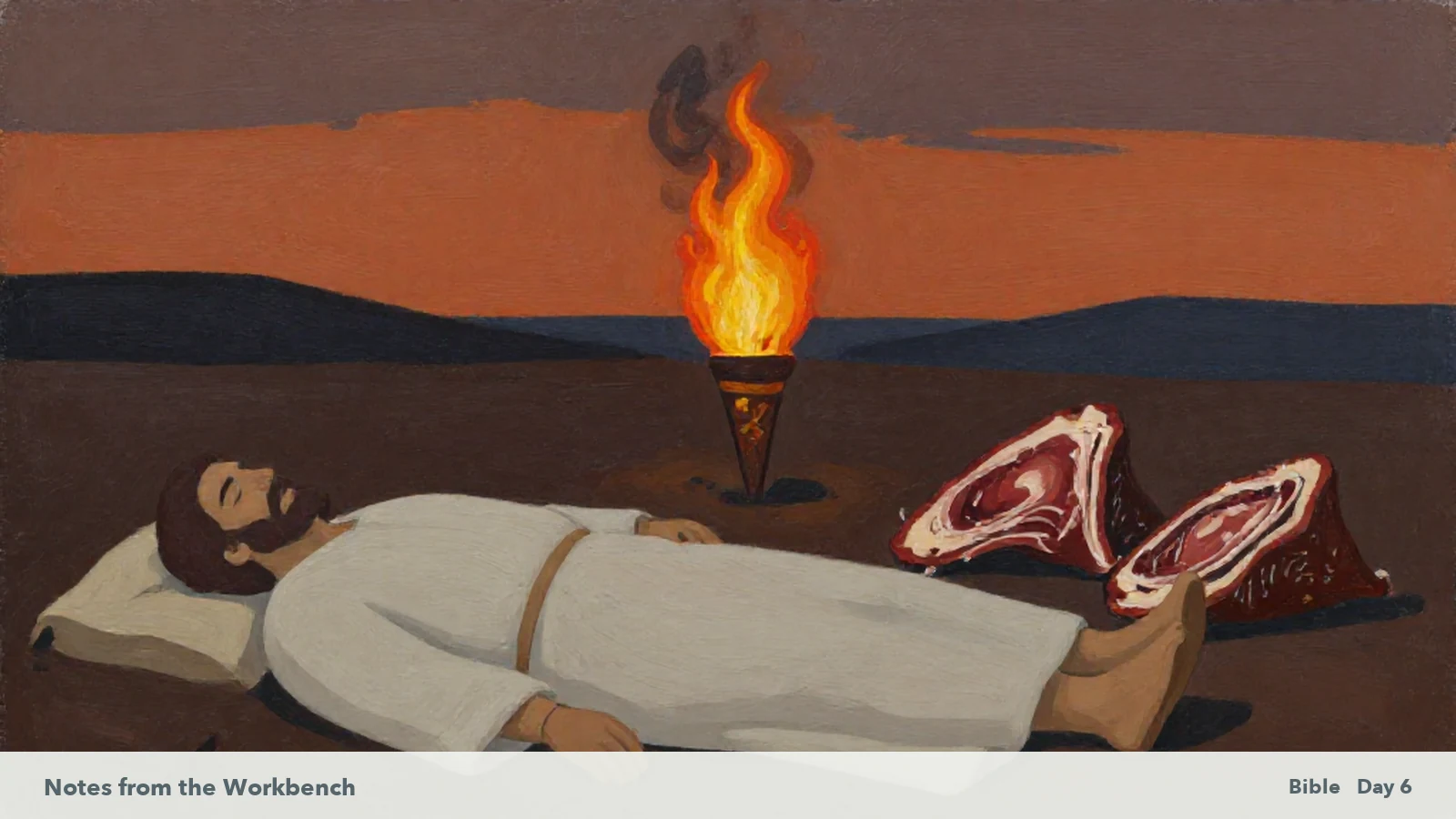
Then there is the covenant ceremony. Animals were divided, Abraham fell into a deep sleep, and a smoking firepot and blazing torch passed between the pieces. Only God passed through. That detail stayed with me: the promise depends on God’s faithfulness. He initiates and guarantees it. Abraham still had no son and no visible fulfilment, yet he was asked to trust before results appeared.
In the teaching on the heart, I saw how anger comes before murder, lust before adultery, and truthfulness before oaths. The focus moves from outward appearance to the inner life. The line about yes being yes and no being no is short, but it exposes how often words are used to manage impressions rather than simply tell the truth. God is not impressed by dramatic promises; He looks for honesty, integrity, and a sincere heart.
David’s pattern in prayer was to begin the day by seeking God. Pray before acting, ask for guidance, and trust God despite opposition. That is a small but practical correction: the first response to difficulty should be prayer, not panic.
Wisdom also warned me. It calls out before disaster, and people ignore it because they think they know better or do not want correction. Consequences eventually arrive. Wisdom is not just knowledge; it is responding when God speaks.
Questions I am still carrying
Why did Abraham give a tenth? I see gratitude, recognition that victory came from God, and the first biblical example of tithing. Why did he refuse the king’s wealth? He wanted God alone to receive glory, and he did not want anyone to say they had made him rich. Why did God appear as fire and smoke? These are common biblical signs of God’s presence, holiness, and power. Was Abraham asleep? Not in an ordinary way; it seems more like a God-given deep trance or vision where he received revelation. These are questions I am still carrying.
Prayer
Lord, help me trust Your faithfulness before I can see the outcome. Make my words simple and true. Teach me to pray first when difficulty comes, and to respond when You speak rather than waiting for consequences to teach me. Keep my heart sincere, and let my giving and my words point to You rather than to me. Amen.